


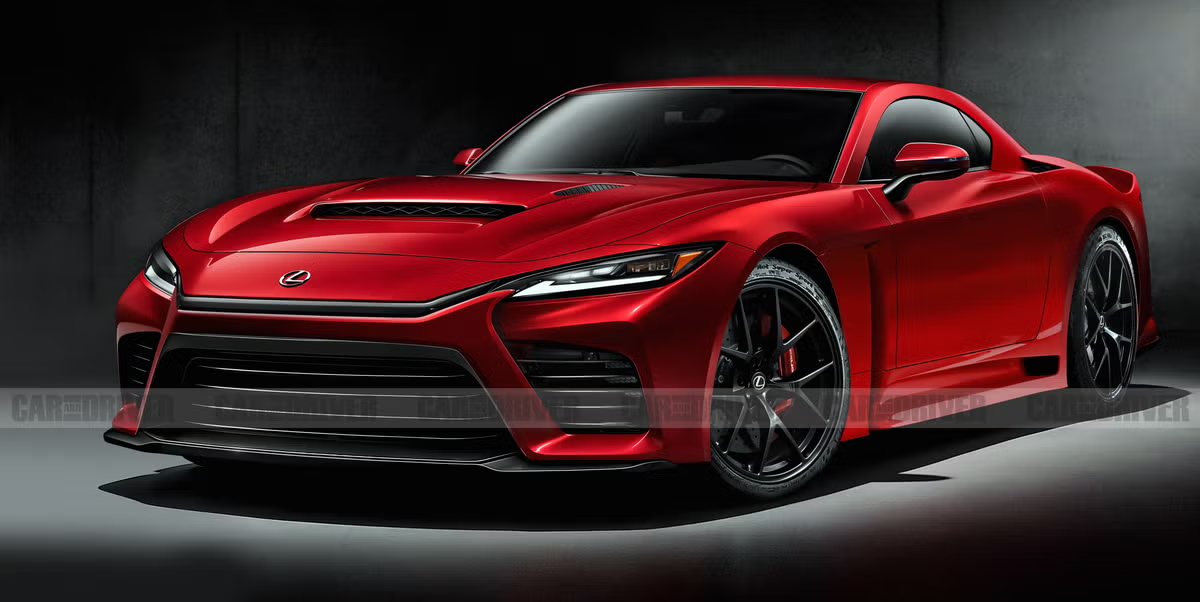
The Lexus LFR is expected to become the brand’s most ambitious performance car since the legendary LFA. Though still under development, public prototypes and official hints have finally given us a clearer look at how Lexus plans to take on Europe’s modern supercar elite.
A New Halo for Lexus—or Toyota GR?
Lexus filed the “LFR” trademark in Europe in 2022, sparking speculation that this would be the official successor to the LFA.
Yet in 2025, the prototype shown at Goodwood wore Toyota Gazoo Racing / GR GT branding — leading to uncertainty over whether the production version will be sold as a Lexus LFR or Toyota GR GT depending on market positioning.
Most analysts still expect a Lexus-badged luxury road-car and a GR-badged racing variant to coexist.
Design: A Modernized Front-Engine Supercar

Spy photos and prototypes reveal a long-hood, cab-rearward architecture with a wide stance and aggressive aero detailing.
Key design features include:
-
Slim, wing-like LED headlights
-
Large intakes and functional bonnet vents
-
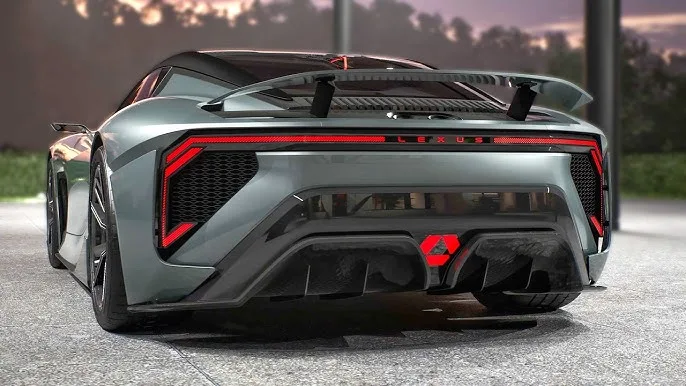
Quad exhausts and rear diffuser
-
Sleeker tail with integrated ducktail or wing (variant-dependent)
A more extreme GT3-style version features bigger splitters, canards, and a motorsport-spec wing.
These cues closely echo the LFA’s performance DNA — but sharpened for the hybrid era.
Powertrain: Hybrid V8 Muscle
While unconfirmed by Lexus, multiple outlets report the LFR will use a:
Twin-turbocharged V8 + hybrid-assist
producing around 700 horsepower — a major jump over the LFA’s 560-hp V10.
Racing-focused versions will likely ditch the hybrid system to reduce weight and comply with GT3 rules, targeting 500–600 hp.
Speculated performance:
-
0–100 km/h under 3 seconds
-
Nürburgring lap times under 8 minutes (projected benchmark)
Interior Philosophy — Luxury Meets Track Focus
Interior images remain rare, but early coverage suggests a driver-centric cocoon mixing motorsport ergonomics with premium Lexus materials like:
-
Alcantara and leather combinations
-
Carbon structural trim
-
Deep bucket seating
-
Full-digital cluster with minimalist infotainment
A design-focused “LFA EV Concept” shown by Lexus hints at structural goals, an aluminum frame, and double-wishbone suspension to maximize rigidity and precision.
Launch Roadmap & Market Strategy
According to multiple news reports, the LFR (or GR GT) is targeting a late-2026 to 2027 production window.
Likely rollout strategy
-
Lexus LFR | Road-legal flagship supercar
-
Toyota GR GT3 | Motorsport-homologated racer
-
Possible track-day special | Hybrid-assisted or hybrid-delete for enthusiasts
Pricing predictions vary widely — from $250,000 to over $500,000, depending on trim level and hybrid tech.
Expected competition:
Aston Martin Vantage, Mercedes-AMG GT, McLaren Artura, and even Ferrari’s hybrid lineup.
Community Excitement & Concern
Enthusiasts see the LFR as the spiritual successor to the LFA, reviving Japan’s presence in the supercar arena — but some worry its identity could be blurred if Toyota’s GR branding takes the spotlight.
Still, there is widespread optimism that Toyota and Lexus engineering — especially in hybrid performance — could deliver a genuinely unique supercar.
Why the LFR Matters
If Lexus brings this car to production at scale, it will:
-
Reinstate a Japanese contender among European supercar titans
-
Show hybrid tech can enhance driver engagement, not dilute it
-
Expand Lexus beyond “luxury” — into true halo-performance territory
For a carmaker known for durability and refinement, an exotic, high-output hybrid V8 could redefine what Lexus stands for in the electrified performance era.
Conclusion
The LFR remains in a partially hidden state — its name, badge, and final specs unconfirmed — yet the vision is clear:
A front-engine hybrid supercar with racing bloodline, modern aerodynamics, and luxury polish to honor the spirit of the LFA.
As Lexus edges closer to a final reveal, one thing is certain:
Japan’s next great supercar era is coming.